
At a glance
- Client
- Calocurb
- Industry
- Plant-based GLP-1 supplement
- Markets
- United States-led, with New Zealand sites
- Platforms
- Shopify, Shoplift, GA4, Hotjar, Google Tag Manager
- Services
- Analytics fixes, conversion research, homepage and product page redesign, A/B testing
- Headline result
- 40% peak lift on product page conversion rate
Last updated
Background
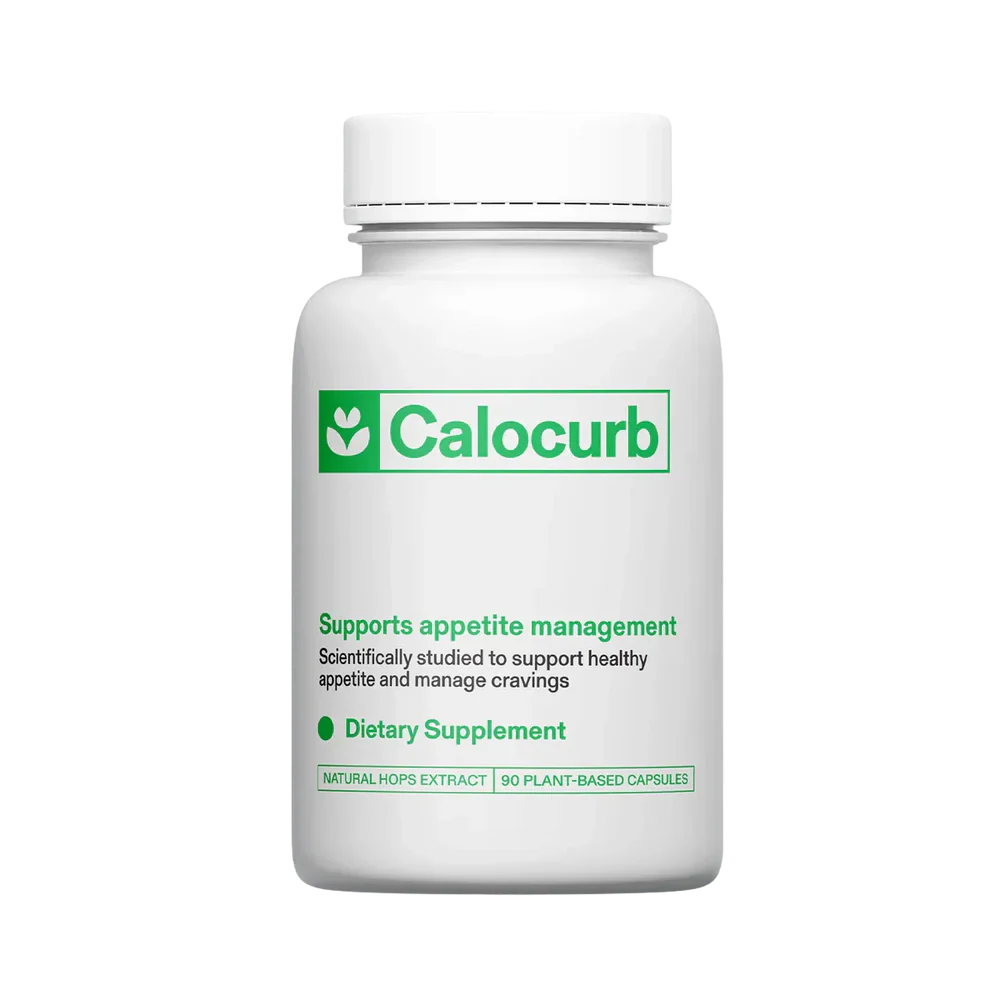
Calocurb is a plant-based GLP-1 supplement, founded in New Zealand and growing through a United States-led strategy. The active ingredient is Amarasate, an extract from a specific bitter hops flower grown in New Zealand's South Island, developed over roughly 14 years with NZ$30 million invested by Plant and Food Research, a New Zealand government-owned Crown Research Institute. It is positioned as the world's first natural GLP-1 activator: a clinically validated, prescription-free option in a weight-management category dominated by the semaglutide injectables Ozempic and Wegovy. Calocurb is clinically shown to stimulate the body's own satiety hormones (GLP-1, CCK and PYY) at up to six times baseline levels. The brand runs three Shopify storefronts: calocurb.com for United States consumers, calocurb.co.nz for New Zealand, and wholesale.calocurb.com for practitioners. Stitch was engaged in December 2024 to lift conversion across the consumer and wholesale sites, starting with conversion research.
The problem
Calocurb sells a premium, clinically validated product at a premium price (a bottle retails at around 89 US dollars a month) in a category where the reference points are pharmaceutical. Conversion rate on the homepage and product page sat below the category benchmark, and the analytics setup behind the sites needed restructuring before any of that performance could be trusted or improved. The December 2024 conversion research identified three barriers. First, value proposition clarity: five-second tests showed that first-time visitors struggled to articulate the product category quickly, so the page was not earning the next click. Second, funnel visibility: the drop-off between viewing the product and adding to cart on United States mobile was high, and it was not visible in reporting because of gaps in the analytics. Third, premium positioning and premium proof: the area above the fold needed to surface clinical credibility, ratings and endorsements far earlier than it did.
The solution
Stitch fixed the measurement foundation first. Eight foundational analytics changes shipped before the first design variant went live, so that every later read on the redesign would be trustworthy:
- Reporting identity switched from blended to device-based, because most visitors do not sign in and device-based avoids thresholding.
- Attribution model switched from data-driven to last click, for more timely and actionable reporting at the available data volume.
- Session timeout adjusted to 7.5 hours, to stop a 30-minute timeout fragmenting sessions, overstating direct traffic and losing conversions.
- Scroll tracking removed from the GA4 enhanced measurement default and rebuilt in Google Tag Manager for greater granularity.
- Form tracking moved to custom Google Tag Manager events, replacing GA4 automatic form tracking that was logging false positives.
- Query parameters de-cardinalised: system-generated parameter pages were filtered out, cleaning up 1,816 sessions on the wholesale site that had been counted as genuine traffic.
- The add-to-cart event was replaced with a select-quantity event on the product page, the action that actually mapped the checkout funnel.
- Event naming normalised to GA4 conventions, removing spaces, uppercase letters and special characters.
With clean measurement in place, Stitch redesigned two surfaces, the homepage and the product page (PDP), through structured research: five-second tests, copy iterations, and heuristic mapping against the eight conversion barriers identified in the December 2024 research. The homepage redesign reframed the category context, restructured the hero around clinical proof points (the trial result tiles showing a 30 percent reduction in hunger, a 40 percent reduction in cravings and an 18 percent reduction in calorie intake after one hour), and pushed testimonials, FAQs and trust signals into a clear visual hierarchy. The product page redesign elevated trust signals above the fold (the NutraIngredients-USA 2024 Product of the Year: Botanical award badge, a regional store selector and an aggregated rating), repositioned the dosage grid and bundle offer for mobile, and surfaced risk-reversal language and clinical credibility earlier in the page.
Round 1 of the A/B test launched in April 2025 on Shoplift, the Shopify experimentation platform, with traffic split 50/50 between the original design (A) and the redesign (B), and measurement married to GA4 and Hotjar. For the first nine days the new product page ran at a +40 percent relative lift in conversion rate over control. Every checkpoint pointed the same way, the result was statistically significant at each one, and abandon rates from viewing the product through to purchase had collapsed.
In late April 2025 a viral United States podcast feature about Calocurb went live. It shifted the composition of the test sample: a large new audience entered both variants with different intent and behaviour, and the measured lift moved from +40 percent to +16 percent within hours. Stitch flagged the shift the same morning, isolated the new segment, and recommended a clean reading of the test by separating the two traffic periods. Under that cleaner read, the structural lift from the redesign held up.
+40%
Peak lift on product page conversion rate (Round 1, before the podcast spike)
8
Foundational analytics fixes shipped before the first variant
100%
Of traffic now served the new product page design
Additional outcomes
- Funnel improvements, view product to purchase (source: GA4 funnel comparison, Round 1 test period versus the prior funnel baseline from the December 2024 conversion research): view product to add-to-cart, materially reduced abandon; add-to-cart to checkout, a meaningful reduction in abandon; begin checkout to purchase, a significant reduction in abandon.
- Conversion research delivered December 2024; homepage and PDP redesign through Q1 2025; Round 1 A/B test launched April 2025; iterative programme continuing through 2025.
- Stack: Shopify, Shoplift, GA4, Hotjar, Google Tag Manager.
- Sites: calocurb.com, calocurb.co.nz, wholesale.calocurb.com.
Closing
Round 2 recommendations went into production through 2025. The new homepage and product page designs became the live pages on calocurb.com, Variant B shipped to 100 percent of traffic, and the programme continued through the year with iterative testing and further rounds of optimisation. The number that matters is the one the redesign was built to move: more of the right visitors reaching purchase, on a premium product, in the hardest category to convert in. Data Inspired Marketing in practice.